Why the First Inspection Should Be Yours, Not the Insurer's
The most useful thing a Summitville homeowner can do after a storm is also the most overlooked: get an independent inspection before calling the insurance company. The reason is simple. Once you file, the process is driven by the insurer's adjuster and the insurer's timeline, and if it turns out there was no real damage, you are left with a withdrawn claim that can still show up in your record. An honest contractor inspection up front answers the only question that matters at that stage, which is whether you actually have storm damage worth filing on. If you do, you walk into the claim with photographs and a written assessment already in hand. If you do not, you have saved yourself a claim you did not need, and that is a result we are glad to deliver. We would rather tell a homeowner there is nothing to file than push a claim that goes nowhere.
The One Meeting That Decides Your Claim
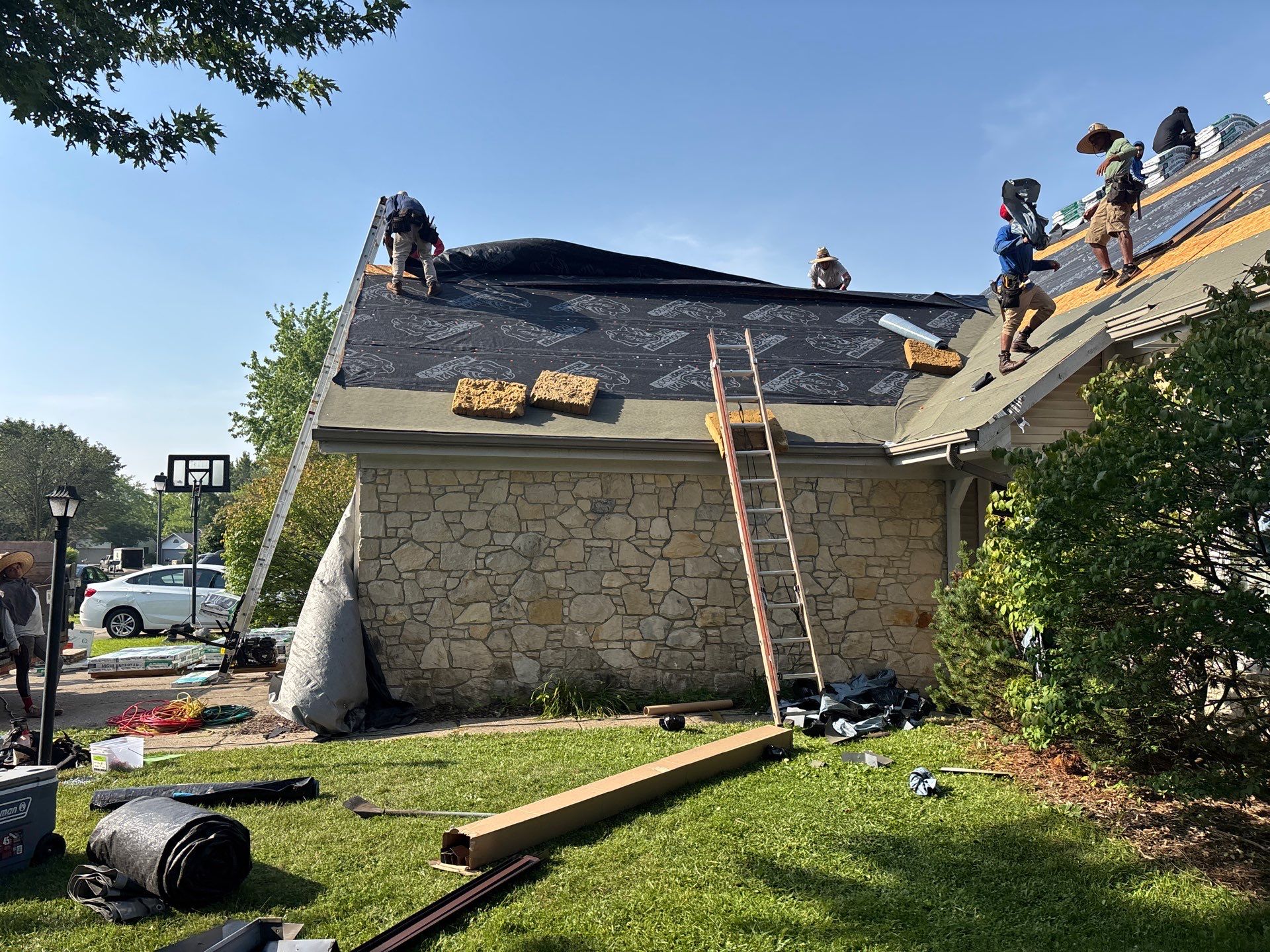
If there is a single moment that determines what a Summitville claim pays, it is the adjuster inspection. Adjusters are not your enemy, but they are not your advocate either. They work for the insurer, they cover large territories, and they inspect a great many roofs every week under real time pressure. Damage gets missed, not out of bad faith, but out of speed. That is exactly the gap a contractor fills. When our crew is on the roof with the adjuster, every damaged slope gets pointed out, photographs get taken in real time by both parties, and disagreements about whether a mark is storm damage or wear get settled on the spot rather than turning into a dispute weeks later. Without someone there representing the roof, you are relying entirely on a rushed first look, and damage that is missed at that stage is hard to recover afterward. Having your contractor present is the single most useful thing you can do for the claim, and it costs you nothing.
RCV, ACV, and the Number That Actually Matters
Homeowners tend to focus on the total claim figure, but the number that actually decides your out of pocket cost is your coverage type. A replacement cost policy pays the full cost of the work minus your deductible, released in two parts: an initial payment to get the job going, and the remainder, the recoverable depreciation, once the work is finished and documented. An actual cash value policy pays only the depreciated value, which falls as the roof ages, and you cover the difference. On a covered claim, that distinction can be the difference between paying your deductible and paying many times that. Some Summitville policies now apply the cash value rule only to older roofs, so the age of your roof at the time of the storm can quietly change what you receive. A covered claim also typically pays for like kind and quality replacement, meaning an architectural shingle is replaced with an architectural shingle rather than automatically upgraded, and if you want a better product you pay the difference. None of this is in your control after a storm hits, which is why we tell homeowners to read their declarations page now, while there is still time to adjust coverage.
Why Documentation Is the Whole Game
If there is one idea that runs through every successful Summitville claim, it is that the insurer pays for what gets documented, not for what is merely true. A roof can be genuinely storm damaged, but if the damage is not photographed, dated, and tied to a weather event, an adjuster working fast can write it off as wear, and the homeowner is left arguing after the fact. That is why we treat documentation as the heart of the process rather than an afterthought. From the first inspection, every damaged slope gets photographed, the soft metal hits get captured, the storm date gets pulled from weather data, and the findings get written down. When the adjuster arrives, we take parallel photographs alongside theirs so there are two records, not one. The homeowners who keep clean records consistently get fairer outcomes than those who do not, and the gap between the two is rarely about the roof itself. It is about whether the evidence was there when it mattered.
When Insurance Pushes Back
It is worth being realistic about how insurers behave, because it helps you prepare rather than panic. Most pushback on a Summitville claim is standard practice rather than bad faith: a first estimate that underpays, missing line items that require supplements, scope disagreements, and depreciation calculations that trim the payment. These are normal, and an experienced contractor works through them as part of the job by documenting thoroughly and requesting supplements with code references. A smaller share of behavior crosses into bad faith, like denying a clearly valid claim without proper investigation or delaying to discourage a homeowner, and Summitville law provides remedies for that. Knowing the difference keeps you from treating routine friction as a crisis, while still recognizing the rare case that warrants a harder response. For the ordinary Summitville claim, steady documentation and the normal supplement process carry the day.
Why We Will Not Chase a Claim That Is Not There
After a big Summitville storm, out of town crews go door to door, and a common pitch is that they will get your roof replaced for free and even cover your deductible. In Summitville, covering a homeowner's deductible is illegal, and a contractor who offers it is telling you how they operate. We work the other way. We tell you honestly whether the damage rises to a claim, we document what is actually there, and we never inflate damage to manufacture one. Plenty of our storm inspections end with us telling a homeowner that the roof took the storm fine and there is nothing to file, and that is a perfectly good outcome. Summitville Roofing is a local, licensed company with License {license}, here long after the storm chasing trucks have moved on, and the warranties we write only mean something because we are still in Summitville to stand behind them. An honest claim, handled well, is worth far more to you than a fast one handled by someone you will never see again.
What a Storm Actually Did: Repair or Replacement
Part of an honest assessment is separating what a storm actually did from what was already happening to the roof. Isolated damage on one slope, on a roof with years of life left, is often a repair, and we will say so even though a replacement is the larger job. Widespread hail bruising across multiple slopes, or wind damage that has compromised the field, usually warrants a full replacement, and on a covered claim that is what we document. The interesting middle case is the aging roof that takes storm damage, where partial coverage can genuinely work in the homeowner's favor, with insurance paying for the storm related portion while the homeowner handles other aging items during the same project. The point is that the scope should match what the roof needs and what the storm caused, not what generates the biggest invoice.